 Laser Cladding Phương Đông
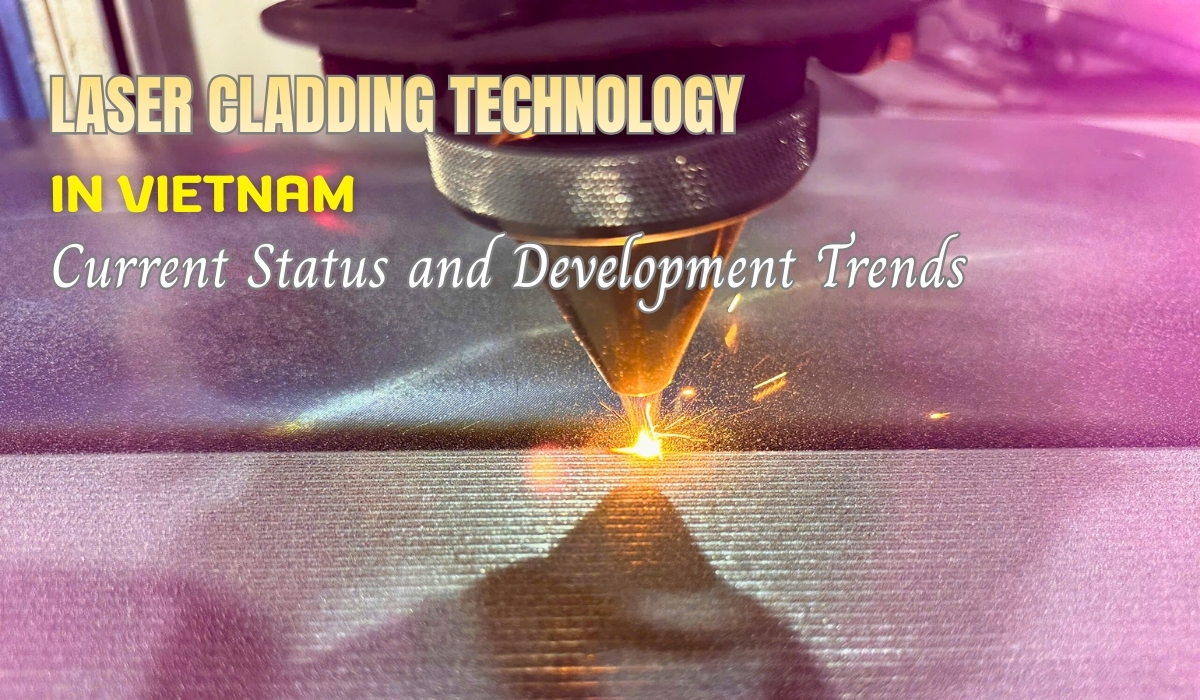
Laser Cladding technology in Vietnam is receiving increasing attention and is being widely applied in mechanical engineering and heavy industries. This advanced surface engineering technology uses a high-power laser beam to create a durable alloy layer on metal surfaces, improving wear resistance, corrosion resistance, and extending component service life.
In recent years, the growing demand for industrial equipment repair has accelerated the development of Laser Cladding technology in Vietnam. Many companies have invested in modern Laser Cladding systems to restore critical components such as shafts, gears, rollers, and high-wear surfaces.
Compared with traditional welding overlay methods, Laser Cladding offers better control of heat input and coating material. As a result, components experience minimal distortion, and the deposited layer achieves stronger metallurgical bonding.
Current Status of Laser Cladding Technology in Vietnam
Laser Cladding technology in Vietnam is still in the development stage but has made significant progress. Several mechanical engineering companies and technical service providers have invested in high-power Laser Cladding systems capable of restoring large components with high precision.
Modern Laser Cladding systems typically include:
- High-power laser source
- Specialized laser cladding head
- Metal powder feeding system
- CNC or robotic control system
- Cooling and shielding gas system
With automated control systems, the Laser Cladding process can precisely control parameters such as laser power, cladding speed, and powder feed rate. This ensures uniform and stable coating quality.
Many components that previously had to be sent overseas for repair can now be restored domestically, helping businesses save both time and cost.
Materials Used in Laser Cladding in Vietnam
Laser Cladding technology in Vietnam commonly uses alloy powders with excellent wear resistance, corrosion resistance, and heat resistance.
Common materials include:
- Nickel-based alloy powders
- Cobalt-based alloy powders
- Stainless steel powders
- Wear-resistant alloys…
Material selection depends on operating conditions such as temperature, load, and working environment. Proper material selection can significantly extend component service life compared to the original material.
Applications of Laser Cladding in Vietnam
Laser Cladding technology in Vietnam is applied in many important industries, including:
- Cement industry
- Thermal power plants
- Hydropower plants
- Steel industry
- Mining industry
- Oil and gas industry
Laser Cladding is commonly used to repair or enhance the surface hardness of components such as:
- Industrial shafts
- Pump shafts
- Rollers
- Gears
- Wear-resistant and corrosion-resistant surfaces
With Laser Cladding technology, many high-value components can be restored instead of being completely replaced.
Capabilities of Laser Cladding Technology in Vietnam
Modern Laser Cladding systems in Vietnam are capable of achieving high precision and stable coating quality. Typical capabilities include:
- Cladding large-diameter shafts
- Cladding long shafts several meters in length
- Robotic automatic cladding
- Software-controlled parameter adjustment
- Post-cladding machining and finishing
Investment in advanced Laser Cladding systems allows domestic companies to become more independent in equipment restoration and reduce reliance on overseas services.
Engineering Team and Experience in Laser Cladding
Besides advanced equipment, skilled engineers and technicians are critical factors determining Laser Cladding quality. In Vietnam, many companies have developed engineering teams trained in Laser Cladding technology, metallic materials, and mechanical restoration processes.
Laser Cladding engineers are typically trained in:
- Selecting suitable metal powder materials
- Setting laser cladding parameters
- Controlling coating quality
- Managing distortion after cladding
- Final machining and finishing
With practical experience restoring various industrial components such as shafts, rollers, and wear-resistant surfaces, technical teams can propose appropriate restoration solutions for each application.
The combination of modern Laser Cladding equipment and experienced engineers helps improve coating stability, ensure restoration quality, and extend component service life.
Development Trends of Laser Cladding in Vietnam
In the coming years, Laser Cladding technology in Vietnam is expected to continue growing rapidly due to increasing demand for industrial equipment repair.
Key development trends include:
- Increased automation
- Wider use of robotic cladding
- Application of high-performance alloy materials
- Improved machining precision
- Restoration of larger components
In addition to repair applications, Laser Cladding is increasingly used to enhance surface properties during manufacturing in order to improve equipment lifetime.
Conclusion
Laser Cladding technology in Vietnam is developing rapidly and becoming an important solution in the industrial mechanical sector. With its ability to produce high-quality coatings with strong bonding and minimal distortion, Laser Cladding helps companies reduce costs and extend equipment life.
In the future, Laser Cladding is expected to expand further and become one of the key metal restoration technologies in Vietnam.