 Laser Cladding Phương Đông
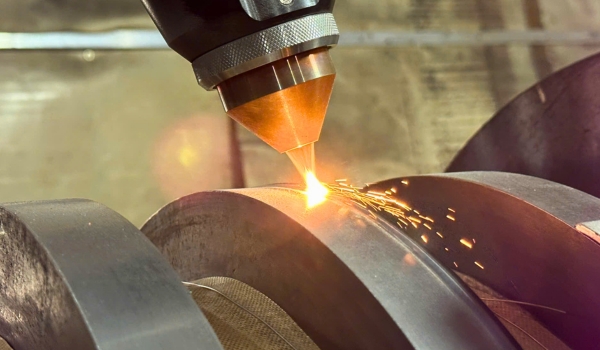
Overview of Laser Cladding Services in Vietnam
Laser Cladding services in Vietnam are increasingly being adopted by industrial companies for restoring and extending the service life of metal components. Laser Cladding technology allows the formation of high-strength alloy coatings with excellent wear resistance and corrosion resistance, helping equipment operate reliably for long periods.
Compared with traditional weld overlay methods, Laser Cladding provides higher precision, lower heat distortion, and better bonding between the coating and the base metal. As a result, important components such as industrial shafts, rotor journals, and wear surfaces can be restored without replacement.
Currently, Laser Cladding services in Vietnam are mainly used in heavy industries such as cement plants, thermal power plants, hydropower plants, steel production, and mining.
What is Laser Cladding?
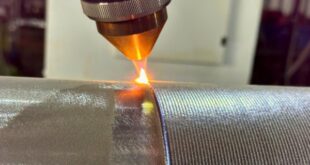
Laser Cladding is a technology that uses a high-power laser beam to simultaneously melt alloy powder and the surface of the base metal. After solidification, a coating layer is formed with strong metallurgical bonding, ensuring durability and stability during operation.
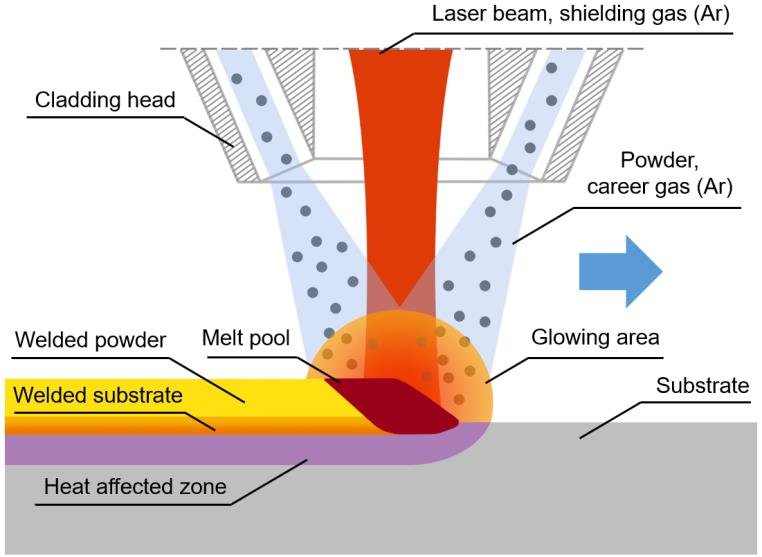
Characteristics of Laser Cladding Technology
- High bonding strength with the base metal
- Coating hardness can be tailored for different applications
- Low heat distortion
- Uniform coating thickness
- Significant improvement in component service life
Thanks to these advantages, Laser Cladding services in Vietnam are gradually replacing many traditional repair methods.
Status of Laser Cladding Services in Vietnam
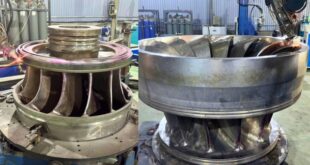
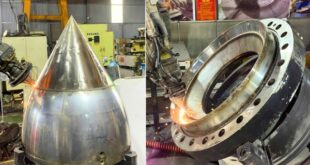
In recent years, Laser Cladding services in Vietnam have developed significantly. Previously, many companies had to send components overseas for repair, resulting in high costs and long turnaround times. Today, several domestic service providers have invested in modern Laser Cladding systems capable of restoring large industrial components.
Common Laser Cladding applications include:
- Shaft and journal restoration
- Rotor journal mirror surface restoration
- Bearing surface restoration
- Gear restoration
- Screw shaft restoration
- Roller restoration
- Bearing housing restoration
- Flange surface restoration
- Surface hardening of components
With the growth of the mechanical engineering sector and increasing maintenance demands, Laser Cladding is becoming a familiar solution in industrial maintenance.
Laser Cladding Service Providers in Vietnam
In Vietnam, Laser Cladding technology is gradually being applied in the restoration and reinforcement of mechanical components. Several mechanical engineering companies and technical service providers now offer Laser Cladding services for industries such as cement, thermal power, hydropower, mining, and manufacturing.
Laser Cladding service providers mainly include mechanical repair companies, industrial maintenance service providers, and technology transfer or research centers. These organizations focus on improving surface durability, wear resistance, and extending equipment service life.
Most Laser Cladding systems in Vietnam currently use metal powder cladding technology combined with automated equipment such as robotic systems or CNC machines, ensuring high precision and consistent coating quality.
Compared to industrialized countries, the number of Laser Cladding service providers in Vietnam is still limited. However, with the increasing demand for equipment restoration and cost optimization, Laser Cladding technology is expected to continue growing in the coming years.
Advantages of Using Domestic Laser Cladding Services
Lower cost
Domestic restoration costs are typically significantly lower than overseas repair services.
Shorter turnaround time
No international transportation is required, allowing faster repair schedules.
Better maintenance planning
Companies can plan equipment maintenance more efficiently.
Convenient technical support
Technical discussions and inspections can be carried out directly and quickly.
Laser Cladding Process
Step 1 – Component Inspection
- Dimension measurement
- Wear condition inspection
- Material identification
Step 2 – Surface Preparation
- Surface cleaning
- Pre-machining
Step 3 – Laser Cladding
- Alloy powder is fed into the cladding zone
- Cladding is performed using a high-power laser beam
- Welding parameters and temperature are controlled to ensure coating stability
Step 4 – Finish Machining
- Turning or grinding after cladding
- Machining to required dimensions and surface finish
Step 5 – Quality Inspection
- Dimensional inspection
- Hardness testing
- Surface inspection
Future Development of Laser Cladding in Vietnam
In the coming years, Laser Cladding services in Vietnam are expected to continue expanding due to:
- Increasing demand for equipment restoration
- Decreasing cost of Laser equipment
- Growing interest in preventive maintenance
- Increasing availability of laser technology
Laser Cladding is not only used for repair but also for surface hardening during manufacturing, helping improve component durability.
In the future, Laser Cladding may become a standard technology for mechanical restoration and surface engineering in Vietnam.
Conclusion
Laser Cladding services in Vietnam are still developing but have already demonstrated their effectiveness in restoring and extending the service life of mechanical components.
With advantages such as high coating quality, precision, and economic efficiency, Laser Cladding is considered one of the most advanced metal restoration technologies with strong growth potential in Vietnam’s industrial sector.