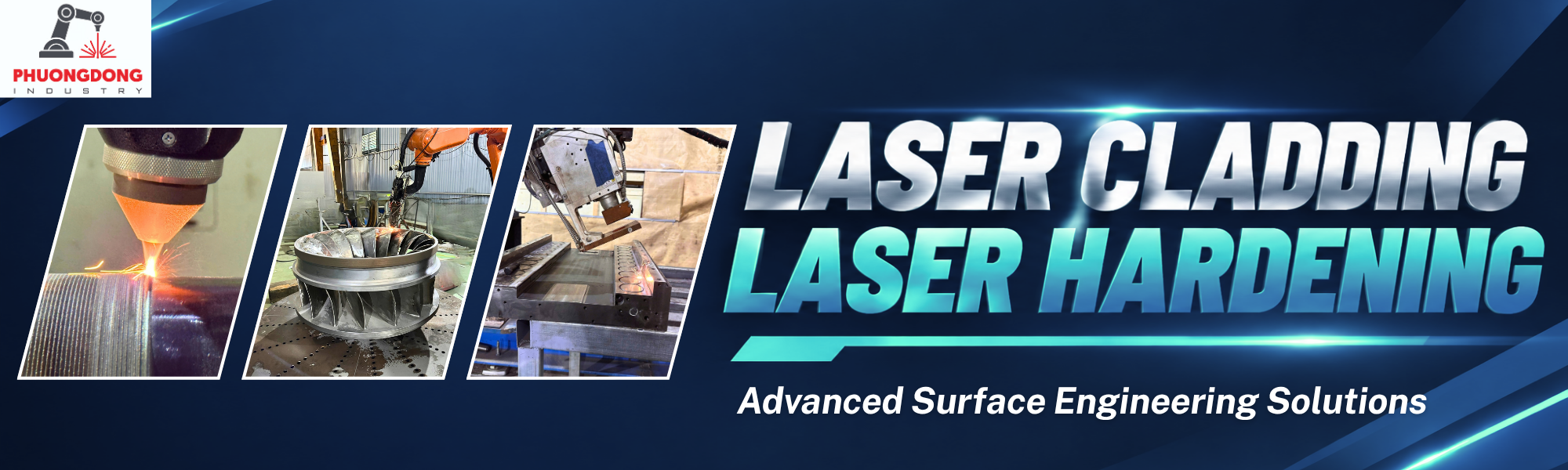
 Laser Cladding Phương Đông
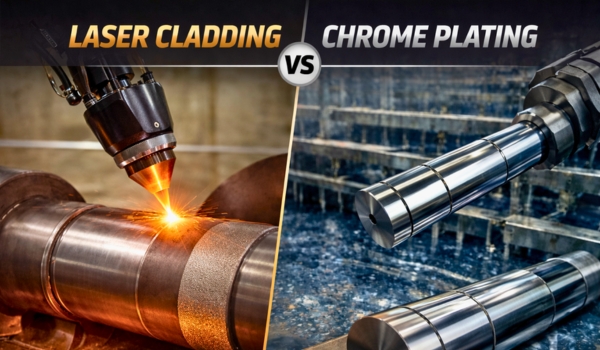
For many years, chrome plating has been a widely used solution to enhance hardness and wear resistance for mechanical components. However, with increasing demands for performance and stricter environmental regulations, Laser Cladding is emerging as a more advanced and efficient alternative.
Laser Cladding – The Shift Away from Chrome Plating
In industrialized countries—particularly China—Laser Cladding has been widely adopted across sectors such as hydropower, oil & gas, cement, and marine engineering. Beyond meeting stringent technical requirements, this technology aligns with environmentally responsible manufacturing trends by reducing or eliminating the use of hazardous chemicals associated with traditional chrome plating.
Laser Cladding has moved beyond the experimental stage and is now applied at scale, especially for components operating under high wear conditions such as piston rods, sealing sleeves, and turbine shafts.
Laser Cladding Key Advantages Over Chrome Plating
Compared to conventional chrome plating, Laser Cladding offers several significant benefits:
- Environmentally Friendly: Minimizes or eliminates toxic chemicals such as hexavalent chromium (Cr⁶⁺), reducing hazardous waste and complying with modern environmental standards.
- Strong Metallurgical Bonding: Coating forms a metallurgical bond with the substrate, preventing delamination.
- Superior Wear and Corrosion Resistance: Performs effectively in harsh environments including water, slurry, and chemical exposure.
- Extended Service Life: Reduces the need for frequent maintenance and replacement.
- Material Flexibility: Wide range of coating materials can be selected based on specific working conditions.
- Applicable to Large Components: Overcomes size limitations commonly associated with chrome plating processes.
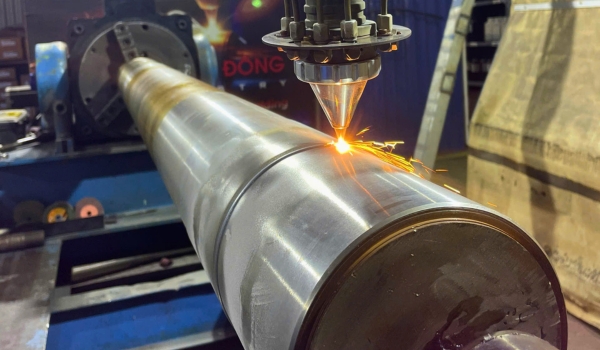
Laser Cladding Cost Consideration: Higher Initial Investment, Better Long-Term Value
While the initial processing cost of Laser Cladding is typically higher than chrome plating, it delivers superior lifecycle value through:
- Reduced maintenance costs
- Minimized downtime
- Extended component lifespan
Future Outlook
Over the next 2–5 years, Laser Cladding is expected to expand further and become a primary alternative to chrome plating in many industries.
In Vietnam, this trend is gradually gaining traction, particularly in sectors that demand high durability, reduced operational costs, and improved production efficiency.
Conclusion
Laser Cladding is not just an emerging technology—it represents a necessary evolution in surface engineering and component restoration. With its ability to enhance performance and optimize long-term costs, it is opening new opportunities for industrial development in the modern era.