 Laser Cladding Phương Đông
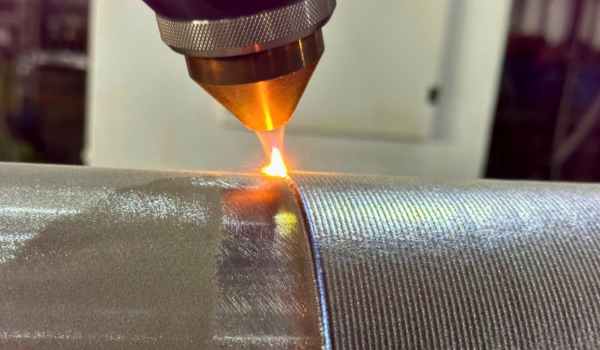
In the context of rising costs for materials, equipment, and industrial resources, many companies worldwide are shifting from equipment replacement to component repair and life extension. At the same time, advanced surface engineering technologies are being adopted to enhance durability and improve performance from the outset.
Among these technologies, Laser Cladding is considered one of the most advanced and effective solutions, with growing applications across industries such as energy, oil & gas, cement, steel, mining, and mechanical engineering.
Global Trend: Component Repair and Surface Enhancement
In many developed industrial countries, repair and reuse of components have become a key part of modern maintenance strategies. Instead of replacing worn or damaged parts entirely, businesses prioritize technologies that help:
- Extend equipment lifespan
- Reduce material and investment costs
- Minimize downtime
- Limit resource and material waste
Beyond repair, companies also apply surface enhancement technologies to improve wear resistance, corrosion resistance, and heat resistance. In this trend, Laser Cladding stands out as an advanced solution capable of producing high-quality metallic coatings with superior durability.
Advantages Over Traditional Repair Methods
Compared to conventional methods such as arc welding, hardfacing, thermal spraying, or electroplating, Laser Cladding offers several key advantages:
- Strong metallurgical bonding
The coating material is melted and bonded directly to the substrate at a metallurgical level, ensuring excellent adhesion and reducing the risk of delamination during operation. - Minimal heat-affected zone (HAZ)
The highly concentrated laser heat source minimizes thermal distortion, making it ideal for precision components. - Low dilution rate
Laser Cladding allows precise control of material mixing, ensuring the coating retains its designed mechanical and wear-resistant properties. - Consistent and uniform coating quality
The process enables accurate control of coating thickness and composition, resulting in high hardness and excellent wear and corrosion resistance.
Not Only Repair – But Also Surface Enhancement
One of the key advantages of Laser Cladding is that it is not only used for repairing worn components but also for enhancing new parts.
By applying specialized materials such as wear-resistant alloys, corrosion-resistant alloys, or heat-resistant alloys, Laser Cladding significantly improves surface performance beyond the original base material. This leads to more stable operation and reduced maintenance costs over time.
Wide Range of Applications
Laser Cladding can be applied to a variety of critical mechanical components, including:
- Shafts and journals
- Gears
- Turbine runners (hydropower)
- Rollers and rolling shafts
- Industrial molds
- High-wear surfaces
Thanks to its high precision and consistent coating quality, it is especially suitable for high-value or technically demanding components.
A Cost-Effective Solution for Businesses
For many industrial systems, replacing components can be extremely expensive—especially when parts must be imported or custom-manufactured. In addition, long lead times can result in costly production downtime.
Laser Cladding enables restoration of dimensions and enhancement of surface properties, allowing components to continue operating reliably at a significantly lower cost than full replacement. Faster repair times also help reduce downtime and production interruptions.
Conclusion
With its superior coating durability, high precision, and ability to both repair and enhance components, Laser Cladding is becoming one of the most preferred surface engineering and restoration technologies worldwide.
In modern industry, adopting Laser Cladding not only helps businesses optimize maintenance costs but also improves equipment reliability, performance, and service life.